

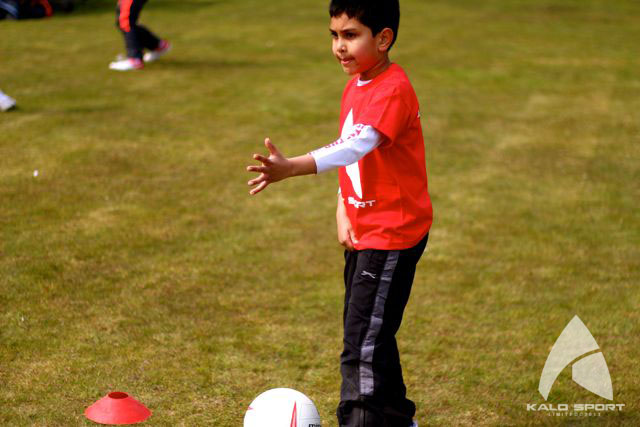
The game of Football is a simple one – 2 teams go against each other in an attempt to score a goal by kicking a ball into the opposition’s net. It is a sport that enjoys the flexible ability to be played on many surfaces, in different spaces and with various numbers, thus it does not encounter many restrictions when being coached.
Unlike many individual sports that require one player against another, football generally can be played in a number of formats in addition to its traditional eleven versus eleven structure. As a result, a number of countries in Europe such as Spain and Holland, have encouraged for many years youngsters under the age of thirteen play small sided games to aid player development. With fewer players on the field it is hoped that individuals have more opportunities to get touches on the ball and ultimately have extra decisions to make by being in possession more frequently. This emphasis on individual technical skill at an early age has certainly paid off for these countries and it was no coincidence that the last Word Cup Final was played out by Spain and Holland.
In this country, it has always been commonplace to see young children playing full-sided matches on traditional adult sized football pitches every Sunday. A heavy emphasis on winning and playing players in a certain position for the whole season really had created a rigid climate that embraced competitive results rather than player development. The English Football Association has only recently begun to address how the structure of youth football in England is having a direct influence on the quality of players being produced. After over two years of research by The FA into the provision of football for children in this country, it was found that current formats of the game were not helping the development of technically excellent players. Many children are playing on full size pitches too soon, which is limiting their involvement in the game and the amount of touches on the ball they have. Furthermore, feedback from the children themselves suggested that they simply weren’t having fun playing football either.
In response to these findings, The FA made a crucial decision last year that will attempt to eradicate the problems highlighted. Its members voted to introduce small-sided games all the way up to under 12 level, which will be played on appropriately sized pitches. In addition, youth leagues will involve shorter competition periods and parents and coaches will be urged to drop a ‘win-at-all-costs’ attitude to youth football. It is hoped that with these changes to the structure of children’s football around the country, a playing environment promoting skill development, fun and higher individual player involvement with the ball will be adopted. The long-term goal is to accentuate player technique and, as a result, produce players of high enough quality to help the England team compete with the best footballing countries in the world.


